 TLR Web TLR Web
|
Entrance
CATHERINE KASPER
|
Because I have opened the door, I must obsess
on hinge, on handle, hewn surface
door jamb and window, brass hardware
Because the plane of glass demands
pure confessional, and you believe in seeing into—
not through, history a point in time
not a blurry surface begging for moisture
and crumpled newspaper, haunted by peering
Since I've crossed the threshold between
telling and creating, between make-believe
and truth: an ingress artificially concocted
for your viewing pleasure, you believe
in the clairvoyant woman who wills her daughter's visit
the door nailed to its mooring
in the X-ray which has proven ambiguous to read—
We both long for a clear break that could be mended
not this suggestion of slivers, not a hairline fracture
that cannot be captured on film
Because a film of dust has clouded the windshield
since I've last sat behind the wheel
Because a wheel is composed of splinters
the existence of things needing mending
and a point in which history crumbles like bone
I drive up the curb and into the door frame
which bends like putty or rubber before it collapses
whether there is someone waiting at the threshold—
a moment which points to the X-ray, perhaps, or a question
|
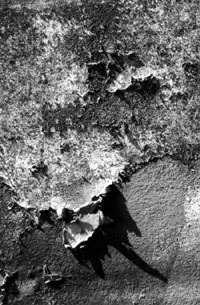
Photo by Amy England
|
|
Tropism
CATHERINE KASPER
|
Where shoulders brush their strangeness onto each other
Doing something that is more than thinking
without the telling, only the seeing
I live in a tropical climate; this is my real life
Where air is chalk there is not a moment's peace
a parrot on the neighbor's porch chatters
In the afternoon, sun bursts like a bitter persimmon
I dream of a gray city where skyscrapers shadow daylight
Close-up the papaya leaves are cut-outs of hands
You are inking a stone tablet, you are engraving alphabets
I imagine you are throwing pebbles on the fabric laid over concrete
Is it possible after so much time to dream the same dreams?
Brown oil drips from the cracks in the ceiling
Why do I feel guilty about this? In the city, I would hurry to the subway
I am at the window thinking about something I should be doing
seeing about this telling
Where they are covered with ants
the banana leaves wilt, crumble into the soil
They see ash from the chimney and call it: confetti saints
If, after so much time, rush hour is the state of these nightmares
Would rhyme make telling easier to remember?
here is no correspondence which can accurately capture
the seeing they tell me to see; ash turns to spots on my arms
This time last year I was planting the aloe, thinking of salve
|
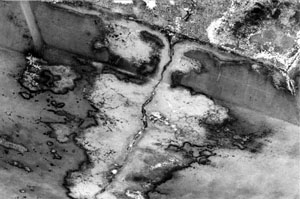
Photo by Amy England
|
|
The World's First Photograph
made by Joseph Nicéphore Niépce in 1826-27
CATHERINE KASPER
|
a blur, really, and angles
on the left, perhaps a building
a tower with two windows and tall walls
a gray building on the right then
an abandoned building, crumbling
cloudy or misty because time was moving
you hold this in your hands
a dull idea of what the world might look like
a triangular ledge or platform whose pier
does not fade into perspective but reaches out
a body of water beyond, always fuliginous
from which grows an island or a promontory
you have this lens and a fuzzy idea which might be
realized, recognized, a two dimensional object
which someone might carry to bed
and by candlelight, stare at its borders and recesses
a painted copy or an evil alchemy?
who would allow the world in your hand
knowing what you must know about all that is blurry?
in the center, a hazy darkness
a depth which can only be speculated
this is what you saw and it isn't
|
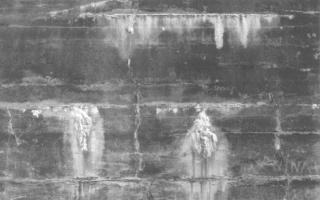
Photo by Amy England
|
|
The Adaptive Geometry of Trees
Poems in encaustic paintings
CATHERINE KASPER
|
1
Photosynthetic Response of the Strategies
The story of trees is pressed
into their flesh
and in their gnarled roots—
breath
the amount of foliage overhead
may be correlated with the amount
of root tissue
below the ground
under the canopy of leaves
cells swim into photosynthesis—
do we reach as high
for happiness
struggle for light?
|
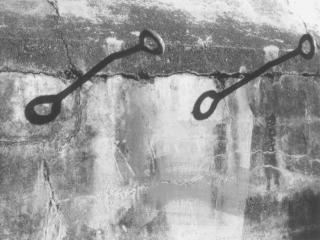
Photo by Amy England
|
2
Analysis of a Forest Succession
In the carboniferous age occurred:
the formation of major coal beds
ferns and seeds
sigillaria, lepidodendron,
ancient conifers
liverworts and mosses
giant insects
amphibia spread
three hundred million years ago—
or so scientists believe
do the conifers dream
of some earlier life—
imprinted in cell memory
slow torture of their growth
into gradual extinction?
In the future, the fossils
will be the hardened records
of our half-life
sadly displayed in a small cabinet
with the skeleton of a chimpanzee
the creviced skull
of the neanderthal
|
Photo by Amy England
|
3
Theoretical Strategies of Leaf Distribution
Coal is made from the carbon
of ancient trees
which do not decay to powder
because they were preserved
in boggy ground away from oxygen
"such huge objects do not fossilize whole"
to understand is to imprint the world
with images that bring about our ends
Zum Erstammen bin ich da
a quote from Goethe—
I am here to wonder
4
Speculations on the Shapes of Tree Crowns
give up roots
grow beyond expectation
in air and light
retract, retreat into
density
these twisting
sinews of sky
if we are essentially
movement—frozen
deprived of
nourishment
petrified
grace
|
Photo by Amy England
|
5
On the Relation Between Theory & Reality
The upturned tree has shallow roots
that bifurcate regularly [see index]
held up like a great hand
blocking the way
or rotting logs
crusted with the green of liverworts
slick with damp moss
warm smell of decay
expectant stillness that comes
only from fecundity
I turn the page, someone
has left their overdue notice
$4.05 and on the other side
a child imitates it in penciled foliage
|
|
Catherine Kasper's poetry and fiction has appeared in Conjunctions, Quarter After Eight, VOLT, and other journals. She is an Assistant Professor at the University of Texas at San Antonio
Amy England's collages and photography have appeared in the journals Women's Studies and Denver Quarterly, and showings of collaborative work (with artist Karen Andrews) at Denver's Edge Gallery and the Denver Art Museum. Her book of poems, The Flute Ship Castricum, published by Tupelo Press, is scheduled for release in April.
TLR Web home page
|
|
|
| |